On average, almost 200,000 people in the UK have their birthday today and, as an ecards company with over two decades of birthday cards in the bank, we find this an agreeable state of affairs. The average, however, does not truly represent reality well; some months, even some days, are far more common than others. With that, let’s take a look at the history of and traditions surrounding birthdays.
Curious Correlation
The Office for National Statistics has compiled data on every birth registered in England and Wales over two decades, and the winning dates are unambiguous: 25th and 26th September, curiously nine months after Christmas Day and Boxing Day. In fact, eight of the ten most common birth dates fall in the last week of September – an interesting correlation that we shall avoid investigating further in this post.
At the other end of the table sit Christmas Day and Boxing Day themselves. Our sympathies to the few thus afflicted and condemned to a life of combined presents and cards that say, “and Happy Birthday!” in smaller writing underneath.
Baptisms and Birthdays
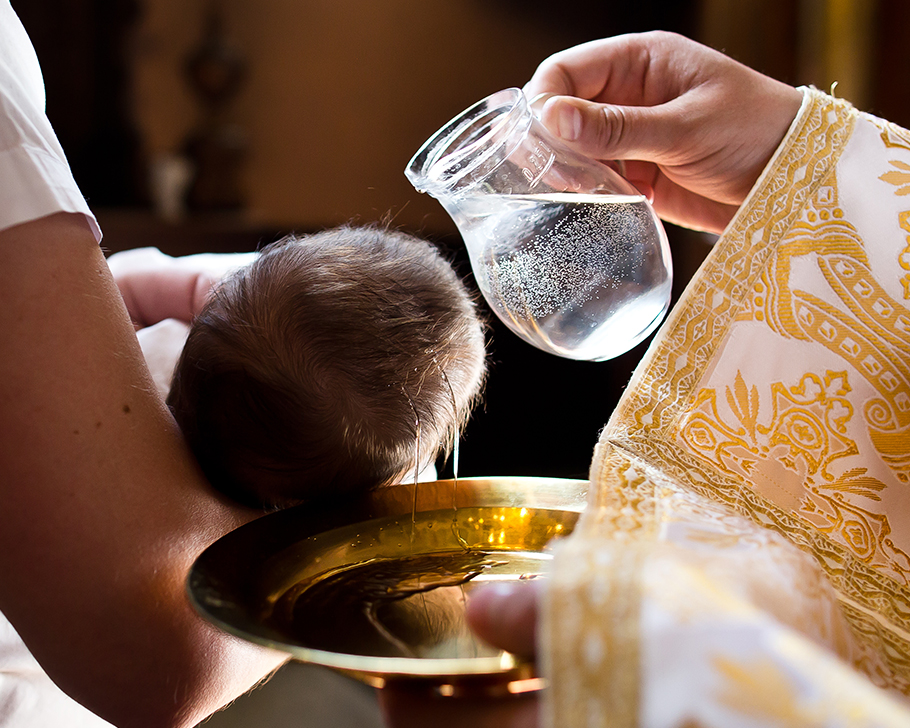
For most of British history, British people did not know when they were born. Until 1st July 1837, the only records with any legal standing in England and Wales were Church of England parish registers, which recorded baptisms, not births. Your documented date was the day you were christened, which might be a few days or a few weeks after your arrival – or even longer if the weather was unaccommodating and the church was a long walk from home. Civil registration began eleven days after Victoria came to the throne. Even then, though, it was patchy at best – it was only in 1875 that it became a legal duty with penalties attached. So, when digging through your family history and finding a great-great-grandparent whose birthday moves by a couple of weeks depending on the document, just remember that they probably didn’t know either.
Early Birthdays
You may see it claimed, in a remarkable number of places, that the ancient Egyptians invented the birthday around 3000 BC, celebrating a pharaoh’s coronation as his “birth” as a god, or that the ancient Greeks baked moon-shaped cakes and set candles on them in honour of Artemis, goddess of the moon, so that the smoke might carry their prayers to the heavens. Both stories are intriguing, evocative and most likely completely made up. Trace them back and you find no Egyptologists or classicists, but a dense thicket of party-supply blogs all quoting one another in nearly identical words. On the Artemis story, National Geographic is pleasingly blunt: there is no historical record of candles being placed on cakes for the gods. It is a modern invention that has been repeated so often it has acquired the shine of antiquity.
Fortunately, the reality is actually rather more interesting. Herodotus tells us the Persians honoured their birthday above every other day of the year, with the wealthy roasting an ox, horse or camel whole for the occasion. The Romans, meanwhile, kept their birthdays seriously: the dies natalis was marked with garlands, incense and cakes offered to one’s guardian spirit. In AD 238, a grammarian named Censorinus wrote an entire book for his patron’s birthday – which rather puts our last-minute card-sending to shame.
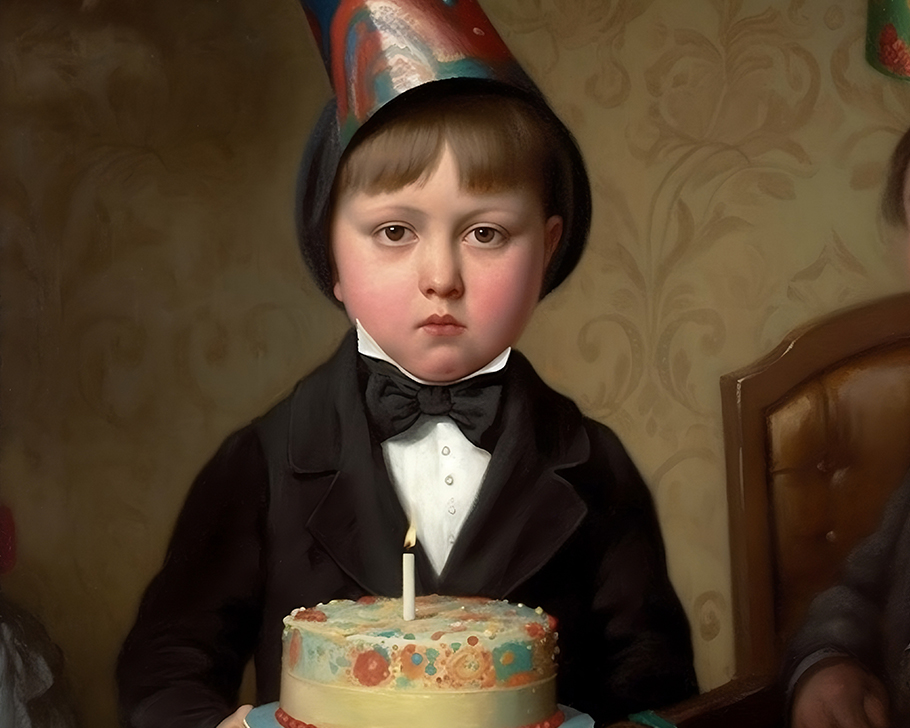
The modern birthday celebration, with games, jelly and ice cream and an exhausting number of over-excited children, is Victorian. The historian Peter Stearns dates it to the middle of the nineteenth century, arriving with the novel idea that childhood ought to be happy – and it was heavily resisted! For several decades there were serious objections to the whole affair, claiming that it was vain, indulgent and likely to give children an inflated sense of their own importance.
Birthday Cake and Candles
So where did the cake and candles come from? Well, the candles are a German inheritance, with the earliest clear description coming from the 1740s. A guest at the birthday of Count Nicolaus Ludwig von Zinzendorf described a cake “as large as any oven could be found to bake it”, with holes made in it according to the years of the person’s age and a candle stuck into every one – and one more in the middle.
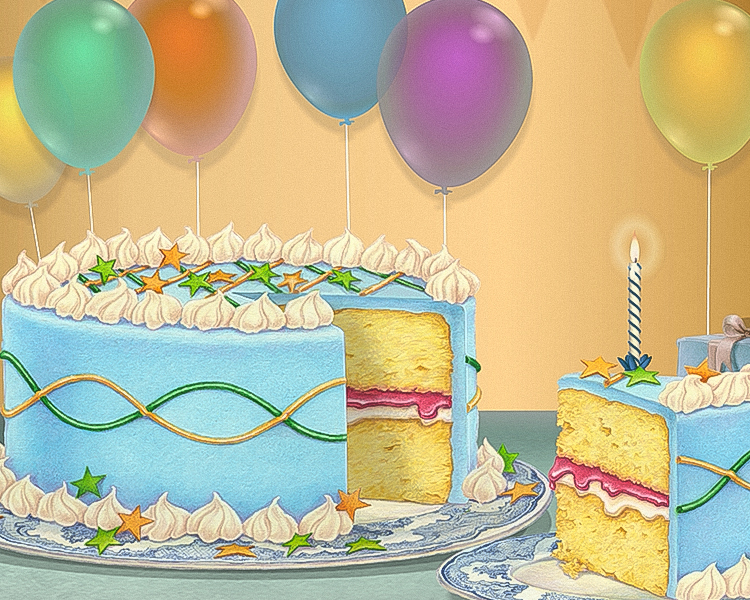
As for what houses the candles, cake has been part of ritual for a very long time indeed – the oldest surviving example, from an Egyptian tomb, is over four thousand years old and was baked to be buried rather than eaten. It is, however, the more recent Victoria Sandwich (AKA Victoria Sponge) – two buttery sponges with a layer of jam, and cream or buttercream between, and a dusting of caster sugar on top – that is the British default, coming to us from the inestimable Mrs Beeton. Her Book of Household Management from 1861, a ubiquitous presence in culinary history, contains the earliest known printed recipe of this classic cake, baked in a tin and cut into ‘fingers’. It is said that the name comes from it being the favourite of Queen Victoria herself, though, as this is yet another unsourced claim, we can only say that it would have been a very sound choice.
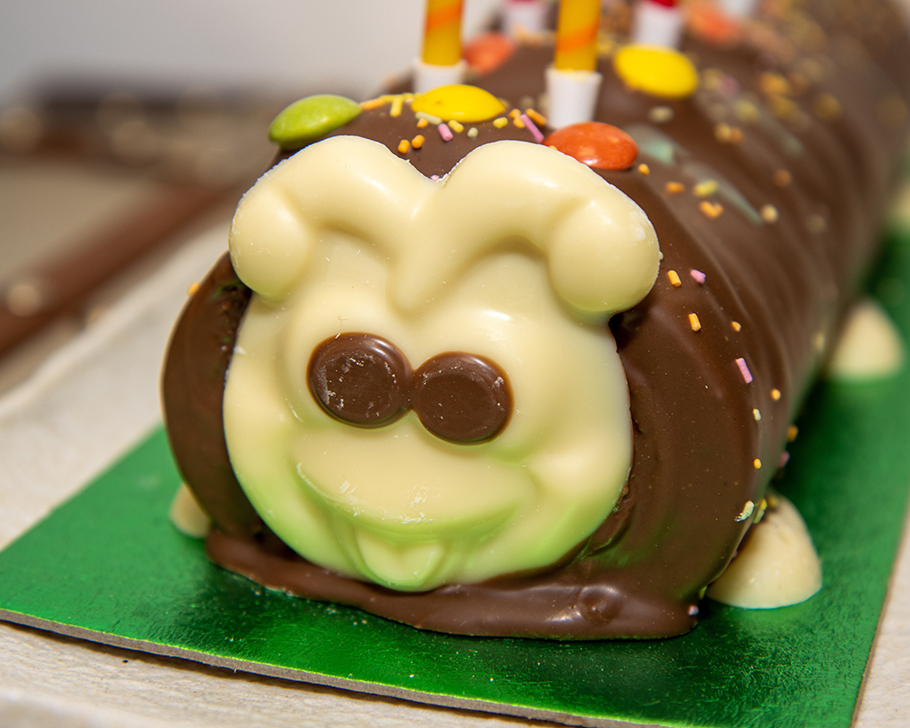
In recent times, however, there has been a rapid pivot away from this in favour of the vibrant – and quite absurd – caterpillar cake. A chocolate Swiss roll adorned with a great many sweets and a smiling, welcoming chocolate face, Colin the Caterpillar arrived on the shelves of Marks & Spencer in 1990. Since then, he has become nothing short of a cultural icon, a national treasure and the dream cake of all children – and many adults – in every corner of the country. Other supermarkets caught on to the trend soon enough, now presenting a roster of Aldi’s Cuthbert, Sainsbury’s Wiggles, Morrisons’ Morris, the Co-op’s Charlie and Waitrose’s Cecil, to name just a few.
In 2021, this made it all the way to the High Court, with M&S arguing that Aldi’s Cuthbert resembled Colin too closely. Aldi responded with a public #FreeCuthbert campaign and the nation was fanatically divided, culminating in a chippy in East Kilbride – in true Scottish fashion – deep-frying a Colin, and a rather anticlimactic out-of-court settlement between the two supermarkets.
Nowadays, M&S alone sells over a million Colins a year and 26th August is National Colin the Caterpillar Day (his birthday, of course). So it seems that this new tradition is perhaps one that has not only grown over the years, but truly flourished – like the humble caterpillar into the beautiful butterfly.
The Card and the Song
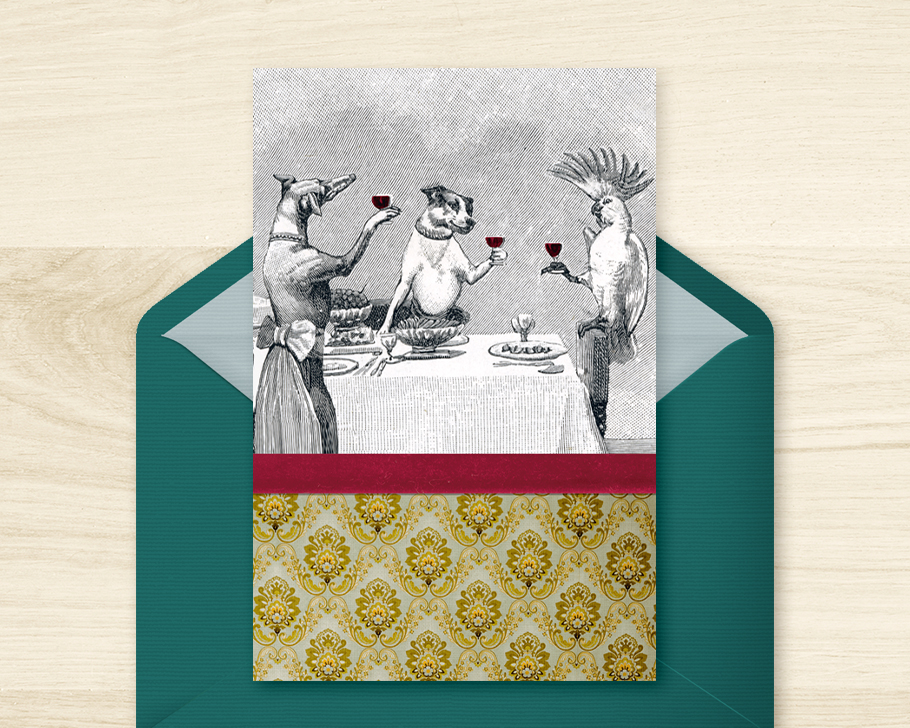
The first commercially printed Christmas card appeared in Britain in 1843, with the first birthday card following close behind. By the 1880s and 1890s, the greetings card was enjoying what collectors still call its Golden Age – a boom made possible, as discussed in previous blog posts, by cheap colour printing and a reliable postal service. Which means the greetings card and the birthday party grew up together, in the same few decades, and for much the same reasons. We at Jacquie Lawson are, in the nicest possible way, merely the result of a Victorian fad that got a little out of hand! !
The infamous song, however, took a little longer to settle. The tune began life in 1893 as “Good Morning to All”, written by two Kentucky sisters – Mildred Hill composed the melody and her sister Patty wrote the original words. Who wrote the “Happy Birthday” lyrics has never been concretely established. However, Warner Chappell Music spent decades collecting licence fees for the song, until a documentary maker, Jennifer Nelson, was quoted $1,500 to use it, then sued. In September 2015, a US court ruled the copyright had never been valid and on 1st January 2017, the song also entered the public domain in the UK and the EU.
Two Birthdays for the King
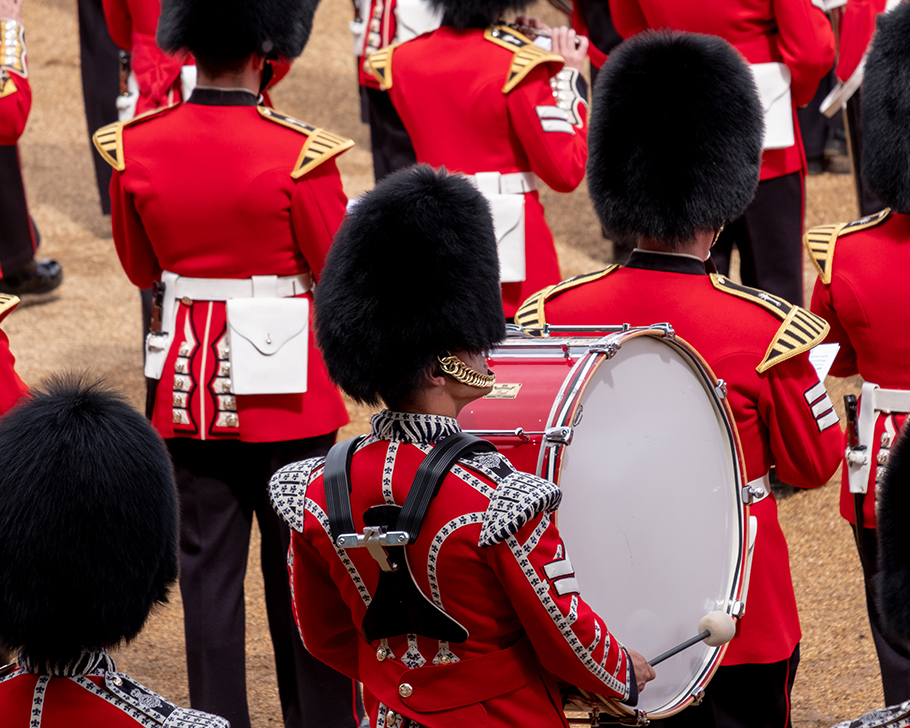
Every June, the Household Division parades on Horse Guards to mark the Sovereign’s official birthday – which is not the Sovereign’s actual birthday. King Charles III was born on 14th November.
The story often told is that George II started this in 1748 because his own birthday fell in notoriously miserable November and he wanted a summer celebration. It is repeated frequently and confidently, and sadly, yet again, doesn’t survive the briefest investigation. Historic Royal Palaces went to the Grenadier Guards’ regimental order books and found that the evidence for 1748 is thin at best. The first unambiguous record of a birthday parade comes in 1805, ordering the Grenadiers into St James’s Park on 4th June – which was George III’s real birthday. However, Edward VII fixed the official birthday in June for good – it being, at least, a safer bet than November for decent parade-ground weather. In 1959, Elizabeth II moved it to the second Saturday of June, where, by convention, it remains.
Besides that, it can perhaps be suspected that many monarchs wish to spend their birthday quietly enjoying the company of friends and family, rather than making public appearances full of what must be quite exhausting pomp and circumstance – and perhaps we should not begrudge them that!
Landmarks and Milestones
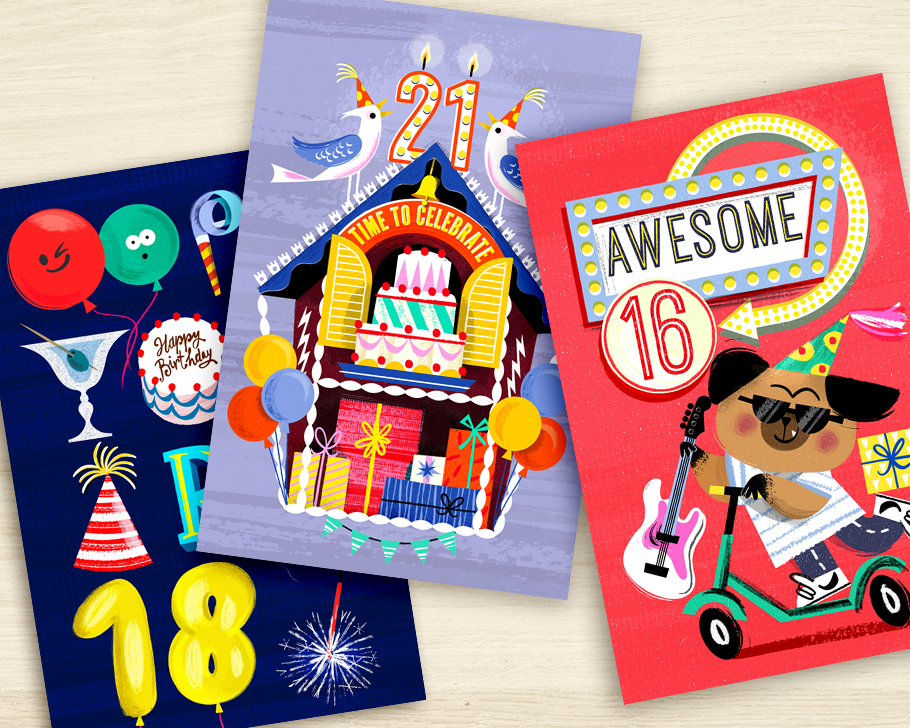
Britain’s main milestone birthday is one’s eighteenth, and has been since 1969, when Parliament lowered the age of majority from twenty-one and gave the vote to eighteen-year-olds. At eighteen, one can vote, drink any alcohol in a bar, buy a lottery ticket and much more. Interestingly, a new law will take effect on 1st January 2027 raising the age to buy cigarettes to nineteen, with this age increasing by one every year following: those born in 2008 are the first people in British history who can never legally be sold a cigarette – even if they see the year 3000! The twenty-first, regardless, is often considered an unofficial milestone of sorts, despite very little changing: one can now adopt a child, supervise a learner driver (after having one’s own licence for three years) and… that’s about it. Many call eighteen “legally an adult” and twenty-one “actually an adult”. Though some parents, particularly fathers, will insist that the age at which one becomes an adult is consistently one year past the age one is.
Sixteen remains a fairly large landmark as well, formerly being the age at which one could live independently, leave education and get married. Nowadays, one can still leave home but must remain in education until eighteen (not necessarily school – apprenticeships count for this) and marriage under eighteen is only allowed in Scotland and, with parental consent, Northern Ireland. One can also drink beer, wine or cider with a meal in a restaurant if somebody over eighteen buys the drink, and can join the military with parental consent – though won’t see active combat until eighteen. Curiously, seventeen is not seen as much of a milestone, even with perhaps one of the most important modern additions: the ability to learn to drive.
Around the World
Elsewhere, things are equally bizarre – often quite delightfully so. South Korea used to count everyone as one year old at birth and add a year to the entire population on 1st January – until the law changed in June 2023 and the whole country woke up a year or two younger! Japan lowered its age of adulthood to eighteen in 2022, but most towns still hold their coming-of-age ceremony for those turning twenty (which is still the drinking age).
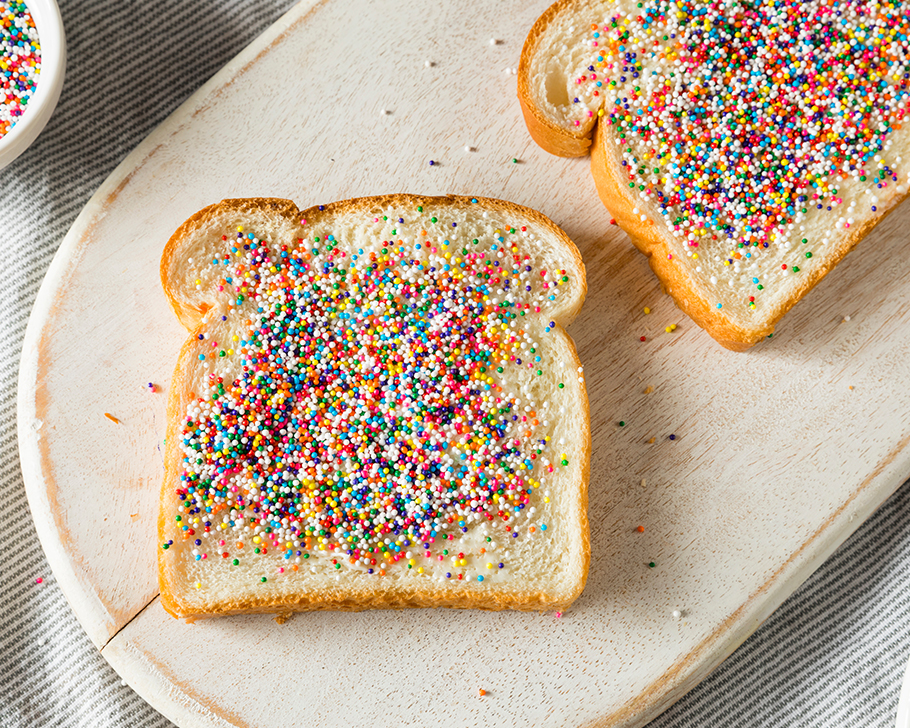
Australian children eat fairy bread – white bread, butter, hundreds and thousands – which first turns up at a children’s party in Hobart, 1929. Before that, confusingly, “fairy bread” meant wafer-thin toast served with soup. Sweden brings out the prinsesstårta (princess cake), sponge and cream under a dome of green marzipan, originally known by the rather less appetising name grön tårta (green cake).

Many Happy Returns
To close, perhaps we should mention the thoroughly British custom of “birthday bumps” – hoisting the birthday child into the air and bouncing them once for each year, plus one for luck – which was recorded, perhaps accurately, by the folklorists Iona and Peter Opie under “tortures”. Or, worse, the schoolboy tradition of “birthday beats”, which is as unpleasant as it sounds: each child will, after wishing their friend a happy birthday, proceed to punch them in the upper arm as hard as they can.
We do not condone these traditions and are rather glad that they seem to have fallen out of fashion. We absolutely condone the sending of cards, however, so be sure to browse our rather extensive collection of birthday cards – and don’t forget to set up birthday reminders when you join Jacquie Lawson so you never miss one again!