
This year, Advent Sunday falls on 29th November – which means that, strictly speaking, we will already be two days into Advent by the time most calendars begin on 1st December. Not that anyone seems to mind – and a 24- or 25-day countdown to Christmas starting on the 1st does have a much more rounded feel! Regardless, the Advent calendar has become such a fixture of the British December that it’s easy to imagine it has always been with us, though it is actually quite a recent addition to our festive traditions.
The printed Advent calendar is little more than a century old, the daily chocolate only became the norm here in the 1990s and the digital kind is, of course, younger still. So, before the first door opens, let’s discover where the Advent calendar really came from: the chalk marks and paper pictures of 19th-century Germany, the printers who turned them into a business, the war that very nearly finished them off and the long journey across the sea – and, eventually, onto our screens.

Advent Before the Calendar
Advent takes its name from the Latin “adventus,” meaning “coming” or “arrival.” For Christians, it is a season of preparation, both for celebrating the birth of Christ and for his promised Second Coming, and it marks the start of the Church’s year. Exactly when it began is uncertain, but by the late 5th century, the Bishop of Tours had set a fast running from St Martin’s Day, 11th November, to Christmas, and Rome eventually settled on the four Sundays we know today.
Those four Sundays are why Advent has no fixed start date. In the words of the Book of Common Prayer, “Advent Sunday is always the nearest Sunday to the Feast of St. Andrew [30th November], whether before or after.” As a result, the season can last anywhere from 22 to 28 days, ending on the evening of Christmas Eve; this year, it is 26 days and, in 2023, it was only 22, with the final day being both the Fourth Sunday of Advent and Christmas Eve.
The first countdown we can firmly date came from the Church, too. In 1839, the Lutheran theologian Johann Hinrich Wichern, who ran a home for poor and neglected children on the edge of Hamburg, hung a wooden cartwheel in its prayer room, set with a small red candle for every weekday and a large white one for every Sunday of Advent, and lit one more each day. In effect, it was a calendar made of candles. The greenery arrived around 1860 and, as the idea spread through Germany’s churches and homes, it slimmed down to the four-candle Advent wreath familiar today.
Chalk, Straw and Pictures
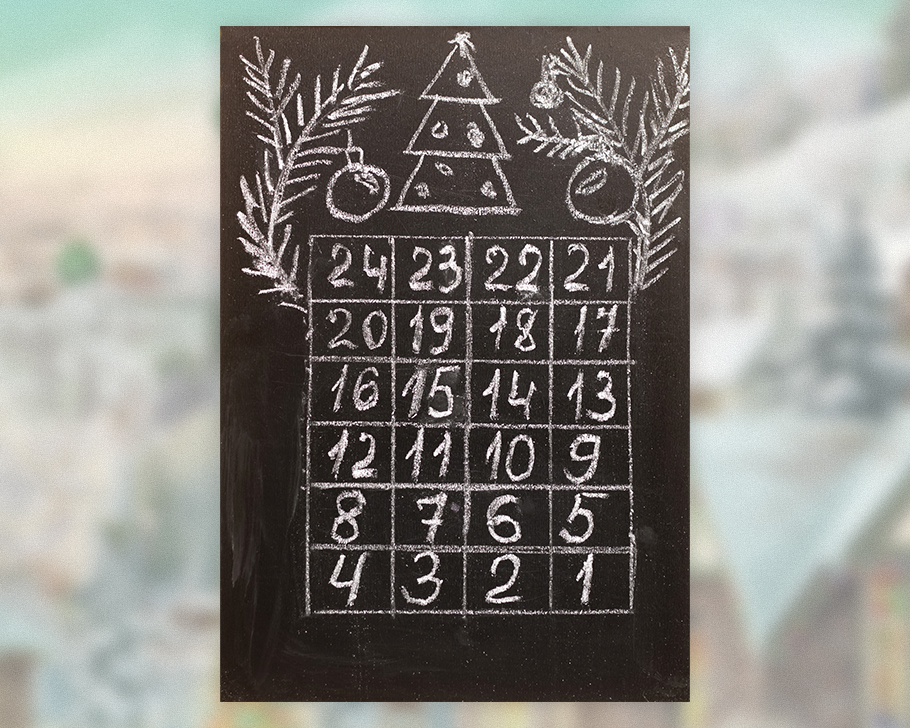
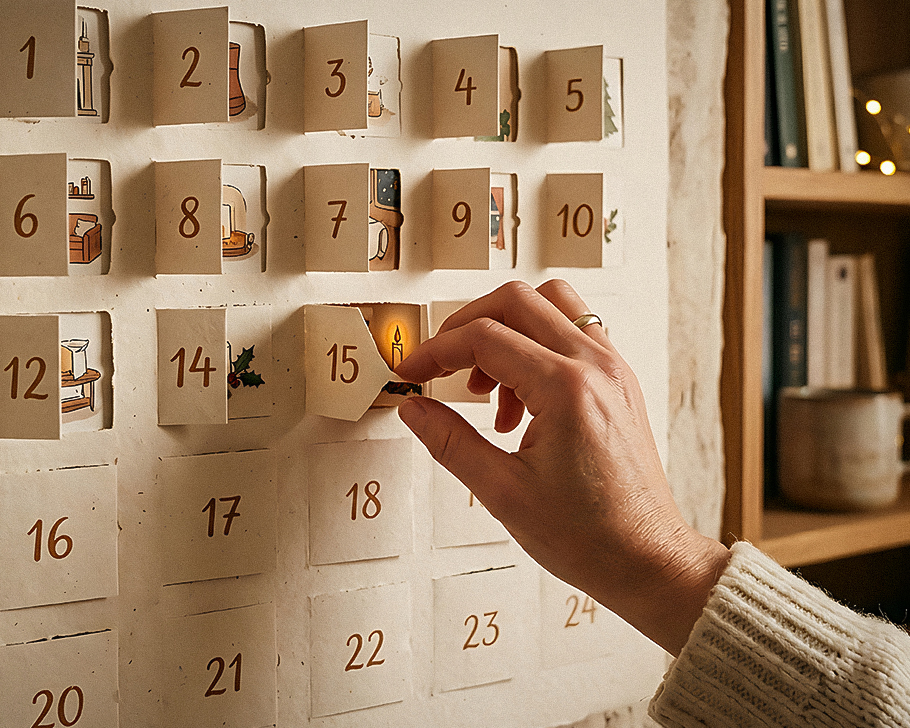
Wichern’s wheel was not the only way to count the days. In 19th-century Germany, families found their own: each day erasing one of a row of chalk marks on a door or laying a single straw in a manger. One of the earliest descriptions of something like an Advent calendar arrives in a children’s book. In Elise Averdieck’s story of 1851, a mother adds a picture to the wallpaper every evening and, when all 24 are up, Christmas has come. Half a century later, Thomas Mann’s novel “Buddenbrooks” (1901) has little Hanno awaiting Christmas, heart pounding, “with the help of the Advent calendar Ida had made him” – Ida being the family’s nanny.
Printed in Germany
It was Germany’s skill at colour printing that turned all this into a business. Chromolithography made bright pictures cheap enough to mass-produce and, by the early 1900s, German children had plenty of Advent calendars to choose from.
The man usually credited with the first of these is Gerhard Lang, a pastor’s son from Swabia who had trained as a bookseller before joining a Munich lithographic printer, Reichhold & Lang. As the story goes, his mother had made him a calendar of her own when he was a boy: 24 “Wibele” (tiny, traditional Swabian vanilla biscuits) sewn on to a piece of card, one to be eaten each day. His printed version, “Im Lande des Christkinds” (“In the Land of the Christ Child”), appeared in the first years of the century – sources disagree on whether it was 1903, 1904 or 1908 – and had no doors at all: just a sheet of 24 numbered boxes and a sheet of 24 pictures to cut out and paste over them, one a day. Even then, he may not have been the first: a “Christmas clock for children,” with a hand to move on day by day, is said to date from 1902.
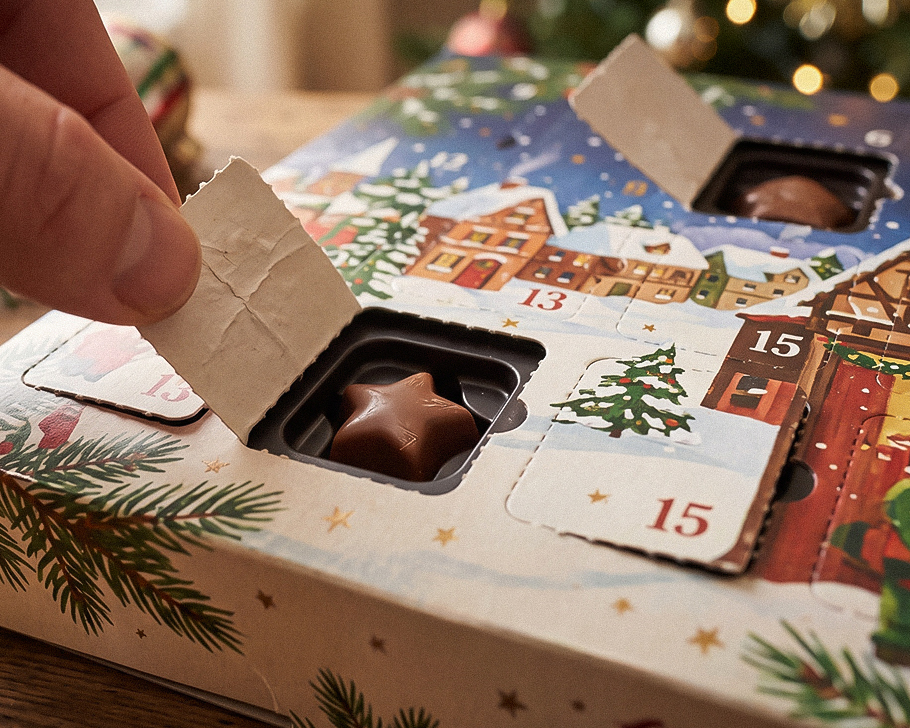
The first calendars with little doors had appeared by 1920 and, in around 1926, Lang brought out one containing 20 pieces of chocolate from the Cologne firm of Stollwerck – decades before chocolate calendars became commonplace.
Then the war very nearly finished them off. Lang’s firm had closed by the end of the 1930s and, in the 1940s, the printing of illustrated calendars was banned – with one exception. The Nazi party’s own publisher was allowed to produce “Vorweihnachten” (“Pre-Christmas”) booklets, which swapped religious pictures for ideological symbols; Berlin’s Museum of European Cultures records them as the only Advent calendars printed between 1941 and 1944. Soon after the war, though, Richard Sellmer of Stuttgart obtained permission from the American occupying forces to print calendars for 1946 and used his American contacts to send them across the Atlantic.
Over the Water
Sellmer’s was not the only route west. Advent calendars became familiar in the United States after the war partly because American servicemen stationed in Germany sent them home – yet, in December 1953, a column in Washington’s Evening Star still felt the need to explain “a three-dimensional cardboard Advent calendar from West Germany.” One charity, at least, soon saw their potential: the National Epilepsy League sold them to raise funds, and a photograph of President Eisenhower’s three young grandchildren posing with one, printed for Christmas 1954, can’t have done their popularity any harm.
Britain took a little longer. The first Advent calendars here were gifts from Germany or Scandinavia, or arrived with immigrants, and after the Second World War some were sent over as tokens of friendship by communities on the Continent. By 1956, they were being made and advertised in Britain – though, as the historian Martin Johnes points out, the adverts still had to explain what an Advent calendar was – and charities soon joined in here, too.
Even then, a British Advent calendar usually meant pictures. Right through the 1980s, the standard version was a cardboard sheet of festive scenes, with the Nativity waiting behind the door for the 24th. Chocolate calendars were made here in the 1950s and 1960s but don’t seem to have caught on, and even Cadbury’s first, launched in 1971, only went into continuous production in 1993 – which, as Johnes puts it, shows “how recent some of our Christmas practices actually are.”
You may also read that the Advent calendar is a Victorian tradition. This is, at best, a stretch: the home-made German kind does date from Victoria’s reign, but she was not queen of Germany and printed calendars first appeared in 1902 at the very earliest – the year after she died.
Beyond the Chocolate
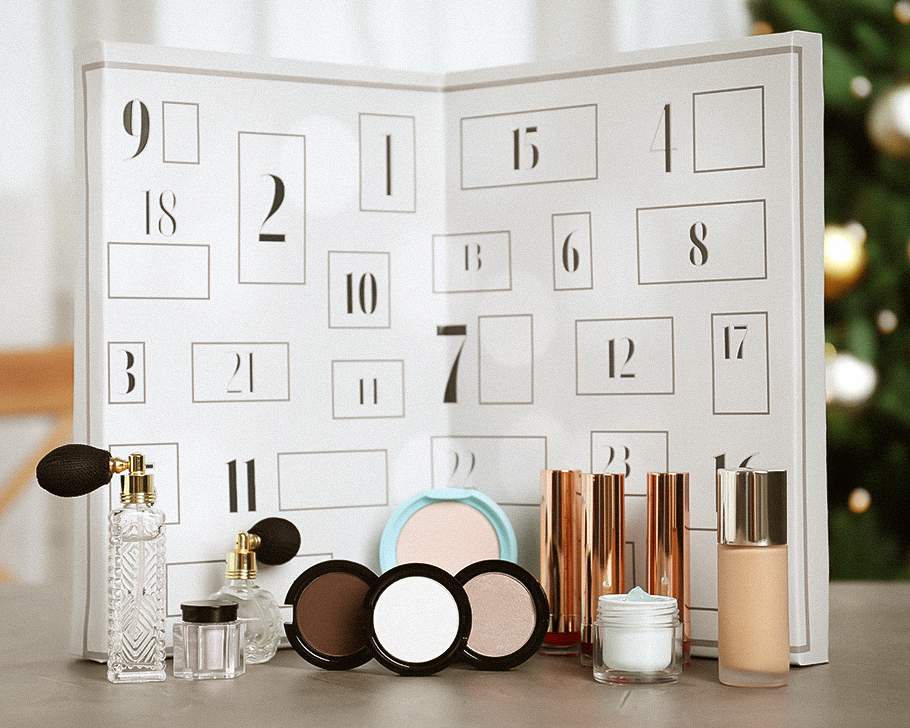
Today, of course, chocolate is only the beginning. Advent calendars now come for adults and even for pets, filled with beauty products, toys, food and drink, and it can sometimes seem as though every brand on the high street has one. Not everyone approves: in 2017, some clergy warned that religious ideas were being “trampled on and colonised.” Still, the perfume and designer-beer calendars are the exception rather than the rule – and for most children, the real joy is probably still the simple one of watching Christmas get closer, one door at a time.
Advent Calendars for the Digital Age
The countdown took to the airwaves, then screens, long before most homes had a computer. In Sweden, a daily Advent calendar programme was broadcast on the radio from the late 1950s and on television from 1960, with a printed calendar at home to open alongside each episode. Danish television followed in 1962 and the TV Christmas calendar remains a December fixture in both countries.
Then came the internet: by late 2000, online Advent calendars were familiar enough that a group of programmers in a London pub could joke about the impracticality of sending chocolate through a web browser – and the next day, one of them, Mark Fowler, built the Perl Advent Calendar, a programming tip for each day, which is still running more than 20 years later.
Our own story, meanwhile, began with a Christmas card. In the autumn of 2000, Jacquie Lawson (with the assistance of her programmer nephew, Mike!) created an animated Christmas card, “Christmas Cottage,” and emailed it to a few friends; within weeks, people all over the world were asking for more. A decade later, in 2010, came the first Jacquie Lawson Advent Calendar, the “Village” – a browser-based calendar filled with animated stories, activities and games. And there has been a new one every year since – counting down, unlike most, not just to Christmas Eve but to Christmas Day itself.
Other Ways to Count Down to Christmas
Not every countdown comes with doors. Generations of us Brits learned to count down with a rather more hazardous piece of engineering, courtesy of the longest-running children’s television show in the world: Blue Peter’s Advent crown, a contraption of wire coat hangers and tinsel that the programme has been making since the 1960s – originally with a real candle on each corner, one lit on each of the last four programmes before Christmas.
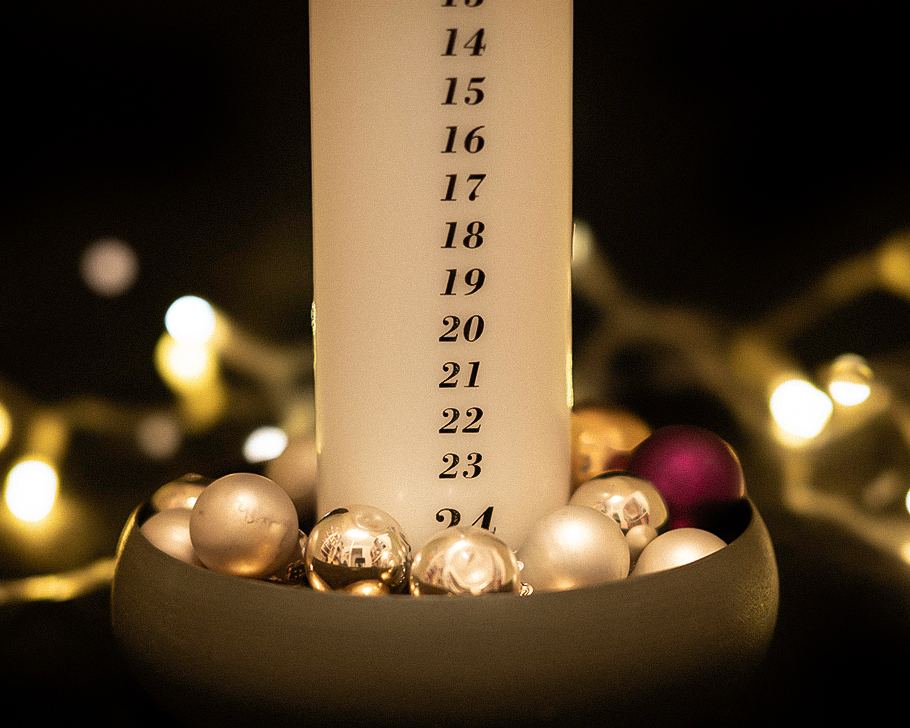
In Denmark, many families light a “kalenderlys,” a candle marked from 1 to 24, burning it down one section a day until Christmas Eve, the high point of the Danish Christmas. Calendar candles were being made by Asp & Holmblad from 1942 and the custom probably owes something to the many candle traditions that took hold during the German occupation. Across the Øresund, Sweden’s first Advent calendar was published in 1934 by the Swedish Girl Guides, to raise funds.
In the Philippines, where the festive season is said to begin with the “-ber” months in September, the countdown proper starts on 16th December with Simbang Gabi: nine dawn Masses, a tradition dating back to Spanish rule, running up to Christmas Eve. Popular belief holds that anyone who attends all nine may make a wish.
And in Mexico, the nights from 16th to 24th December belong to Las Posadas, which re-enact Mary and Joseph’s search for somewhere to stay (“posada” means “inn”). Tradition dates them to 1587, when an Augustinian friar at Acolman, near Teotihuacán, was given permission to hold nine Masses before Christmas. In many homes, the baby Jesus is only placed in the Nativity scene at midnight on Christmas Eve.
Your Christmas Countdown
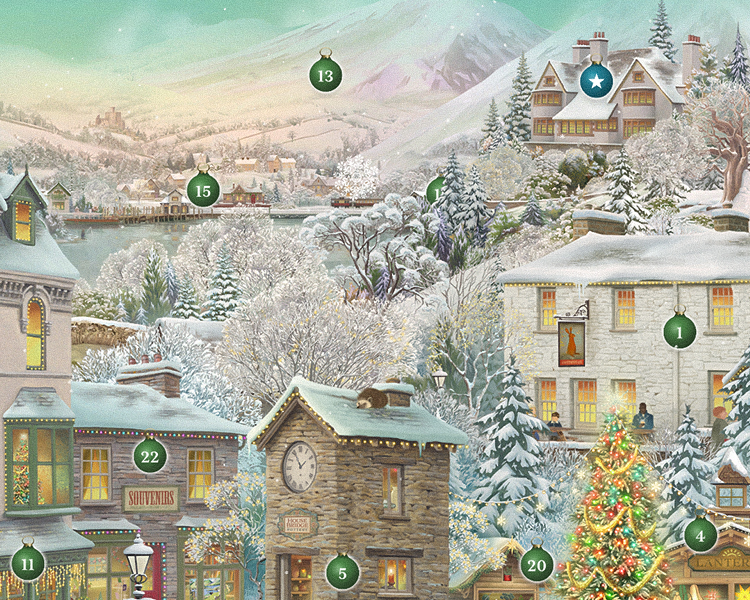
However you count down this year – with chocolate, candle, coat hanger or cardboard door – we hope it’s a happy one. And if you’d like your countdown to come to life with a little animated magic, our new Lake District Advent Calendar is available now for Windows and Mac PCs, and iOS and Android devices.
Other Advent Calendars we think you’ll love
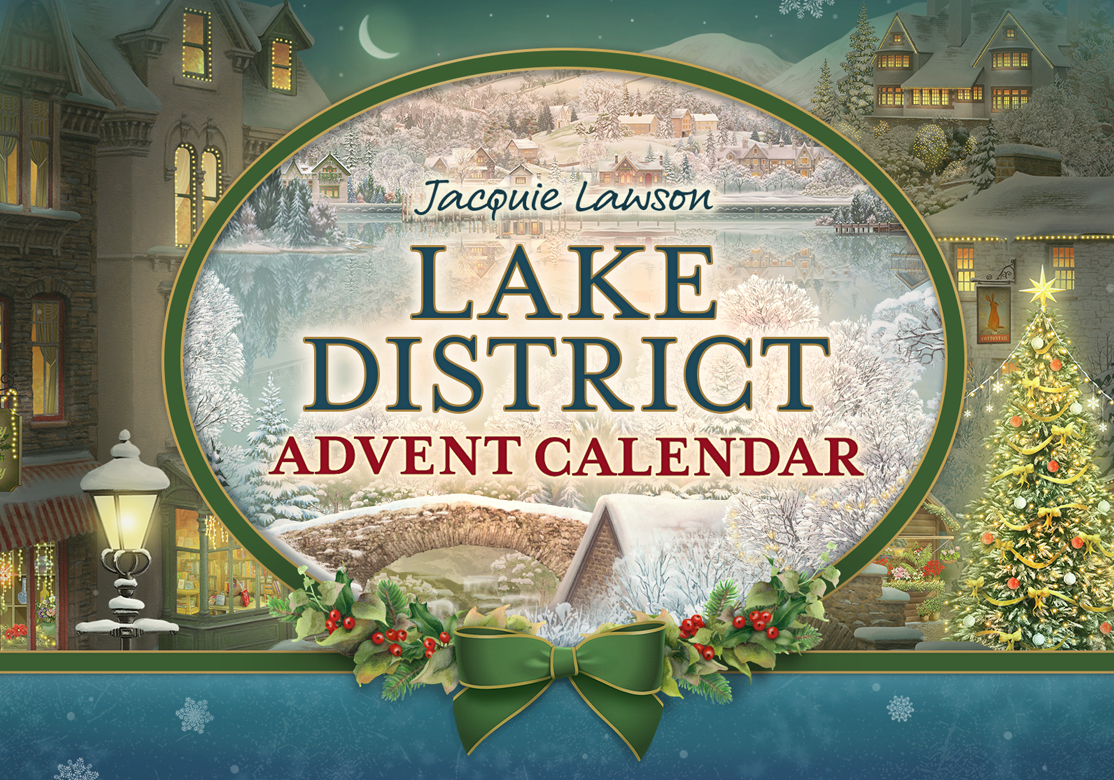
Explore the wintry scene and reveal a new surprise each day.
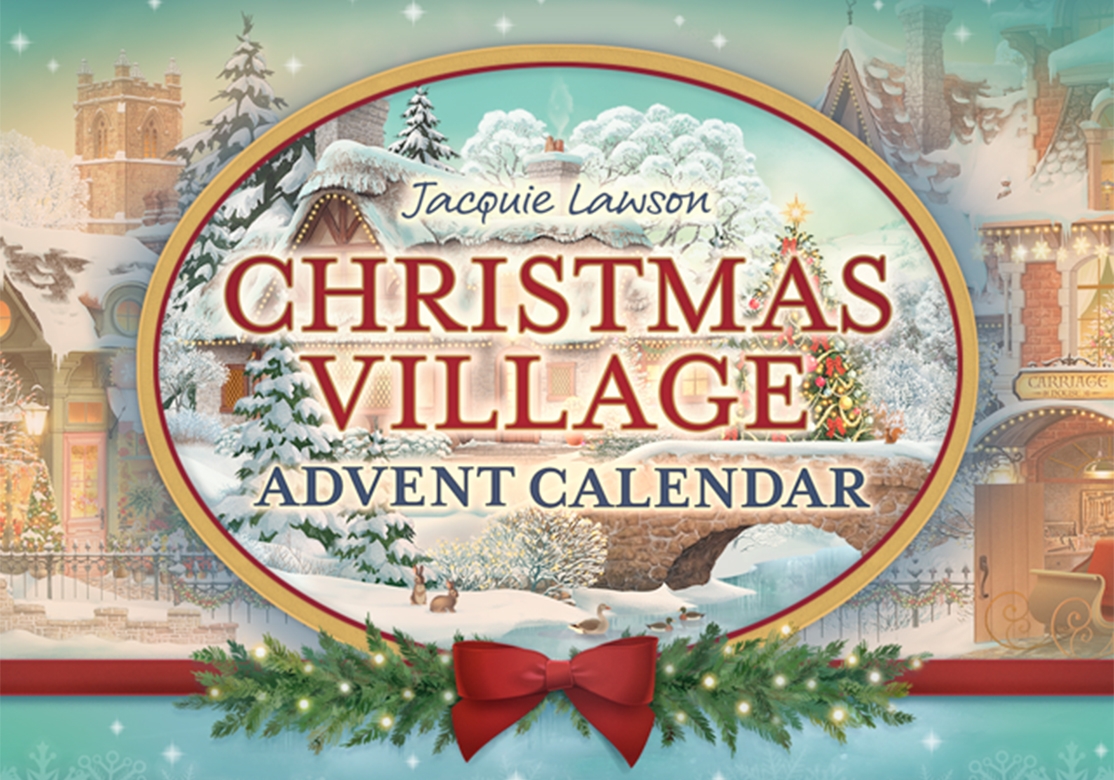
Build a Christmas village, piece by piece, this December!
