
.png)
As the snows of winter give way to the snowdrops of spring, and shop windows fill with chocolate eggs and bakeries with hot cross buns, we know that Easter is on the way! Easter Sunday is on 5th April this year – for the West, at least (see below). This might feel like quite an early one (and it is) but the earliest possible date is actually 22nd March. This, however, last happened in 1818 and will next occur in 2285, so I don’t think any of us need to worry about that!
For many – whether Christian or not – Easter is a joyful mix of traditions: church services, seasonal foods, Easter egg hunts. But why is it called “Easter”? Why do we look for eggs hidden by a giant bunny? And, perhaps most importantly, where did the bunny even get the eggs?! Let’s explore the history of Easter, how these bizarre traditions began and how it became such a beloved holiday.
The Christian Origins of Easter
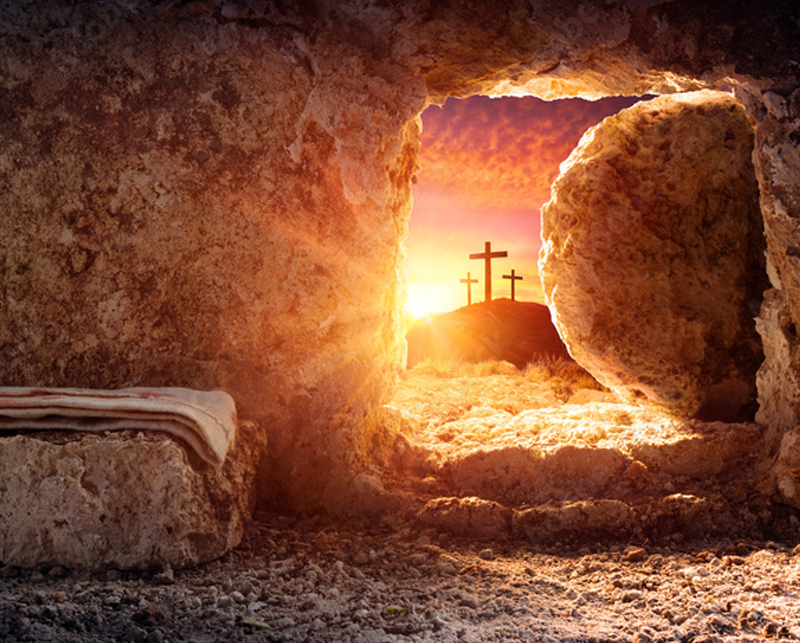
As the principal festival of Christianity, commemorating the resurrection of Jesus Christ after his crucifixion, Easter’s history is quite extensive and relatively well-documented. Even in the early days of the movement that became the religion, the anniversary of the resurrection was celebrated annually, with the earliest observances being closely tied to the Jewish festival of Passover. The Quartodecimans – an early group of Christians – for instance, celebrated on the 14th day of Nisan (the date of Passover). Others, however, insisted it must be celebrated on a Sunday (the day of the resurrection according to the gospels). This dispute was a major problem for the early Church and was not resolved until the First Council of Nicaea in the 4th century AD, which, headed by Emperor Constantine, decreed that Easter should be celebrated on a Sunday rather than tying it directly to Passover.
Still, disagreements on the date continue to this day: in both Western and Eastern Christianity, Easter falls on the first Sunday after the first full moon following the spring equinox, but somehow, they frequently disagree wildly on when this date actually is. The reasons are absurdly complex: the first problem is that they each use different calendars (Gregorian for Western Christianity, Julian for Eastern Christianity), then they use the ecclesiastical equinox (fixed at 21st March) and the ecclesiastical full moon (taken from a 19-year lunar cycle table) rather than the actual astronomical events. Further, the Nicene intention was for Easter to always fall after Passover – following the events of the Bible – but Western churches no longer preserve this relationship, while the Orthodox calendar effectively enforces it because of how everything lines up. All this can cause up to month’s difference in the days on which Easter is celebrated between the two forms of Christianity!
The Pagan Origins of Easter
The modern celebration of Easter doesn’t just draw on Christianity – many of the symbols and themes now associated with it were merged in from pagan spring festival traditions. For millennia, most European societies were primarily agrarian, making the arrival of spring one of the most important moments of the year: after the darkness and scarcity of winter, the lengthening days, brighter and warmer weather, and return of flora and fauna were a welcome sight – even more so than it is to us today. Thus, many ancient cultures celebrated with festivals emphasising fertility, rebirth and renewal. And so it is no wonder that, as pagan religions dissipated in favour of Christianity, the Christian celebration of a resurrection occurring around the same time would take on many of the pagan traditions from festivals in a similar vein.
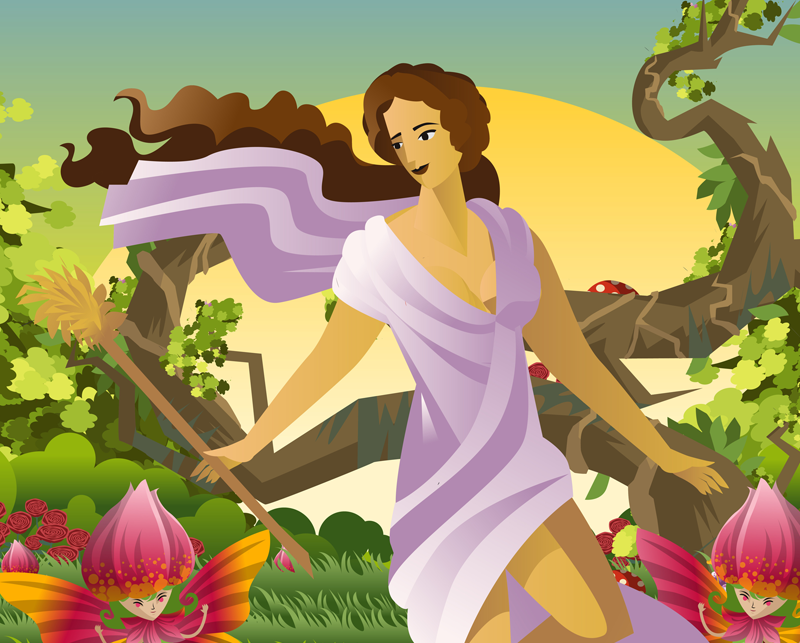
Indeed, the very name “Easter” may have come from the Anglo-Saxon goddess Ēostre (sometimes written Eastre). According to the 8th-century English monk and historian Bede, feasts were held in her honour during the month of Ēosturmōnaþ (the rough equivalent of April). There is likely an etymological link to “East” as well (where the sun rises), through which we can infer that she was probably associated with the dawn as well as spring – if she was ever worshipped at all. After all, Bede is our only source, says very little and may have been mistaken. Regardless, when Christianity spread through Germanic Europe and then England, the name of the month became attached to the Christian festival, leading to the name “Easter” (“Ostern” in German).
Holy Week
The days leading up to Easter form “Holy Week”, a sequence of holy days that are still widely recognised (if not often fully observed) throughout the UK. The first important day here is Maundy Thursday, commemorating the Last Supper – the final meal that Jesus shared with his disciples before his crucifixion. The name “Maundy” comes from the Latin “mandatum” (commandment), referring to the instruction Jesus gave his followers during the meal: “Love one another as I have loved you.” According to the gospels, Jesus also washed the feet of his disciples during this meal as an act of humility and service. In medieval times, Maundy Thursday was celebrated with the repetition of this act in churches throughout Europe – even the royal family joined in washing the feet of poor subjects and distributing clothing, food and money. Although the tradition of washing feet has since disappeared, the tradition of “Royal Maundy” lives on, with the monarch giving specially minted coins every year, known as “Maundy Money”, to local pensioners recognised for Christian service and community contribution – as many men and as many women as the monarch’s age.
The next day, Good Friday, is – in spite of its cheery name – perhaps the most solemn occasion in the Christian calendar, commemorating the crucifixion and death of Jesus Christ. While the name is often explained through “good” once meaning holy, or that his sacrifice brought about the “good” of humanity’s salvation, the origins of the term are unknown. Either explanation could be right, or both could be wrong – we really have no way of knowing.
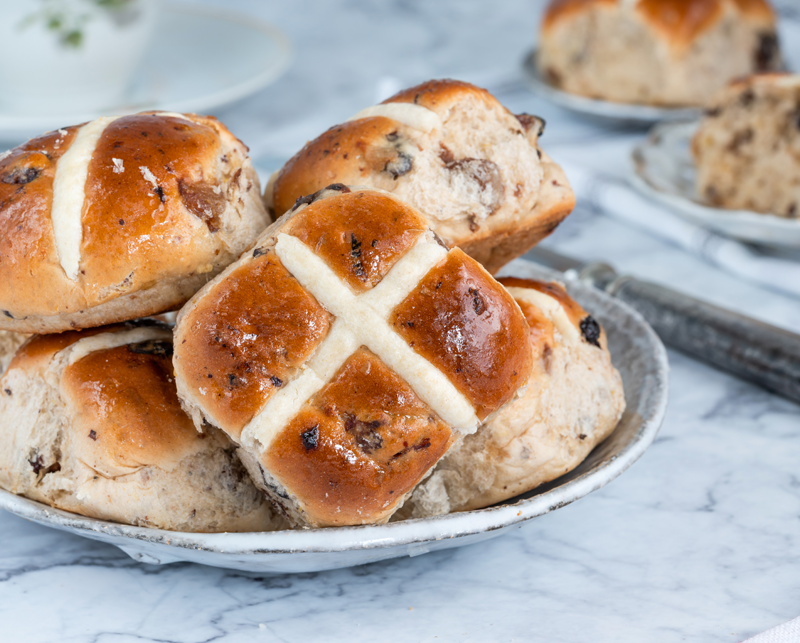
In the UK, this date is a bank holiday, meaning most schools and workplaces will be closed for the day, which is wonderful for us because it means more time to eat hot cross buns! These lightly spiced buns, usually containing currants or raisins, are marked with a cross on top to symbolise the crucifixion and have been so popular for so long that there is an oft-cited London decree of 1592 limiting their sale to Good Friday, Christmas and funerals – anyone who broke this rule would have their goods confiscated and donated to the poor. Nowadays, thankfully, they are sold well before Eastertime arrives.
Easter Saturday, sometimes known as Holy Saturday, has few associated traditions outside of being considered a quiet and contemplative time. Some Christian traditions hold an evening service – the Easter vigil – but most of us simply relax and prepare for the next day with shopping, baking and egg-decorating.
And with the arrival of the big day itself, Easter Sunday, comes a plethora of traditional activities. Even in an increasingly secular Britain – probably almost half of us now identify as non-religious – many begin the day with a morning church service. Filled with music and traditionally decorated with spring blooms such as lilies and daffodils to symbolise rebirth and renewal, these bright services are a far cry from the sombre mood of those on Good Friday.
Whether religious or not, most of us centre the day on family, festivity and – most of all – food! One of the most eagerly anticipated traditions, particularly for children, is the Easter egg hunt. Several small chocolate eggs are hidden around homes and gardens, usually creating a trail that leads to a much bigger chocolate egg. Most often, these eggs are hidden by the Easter Bunny, whose story we will explore shortly, but sometimes a mum or dad might need to assist – the Easter Bunny is a rather disorganised fellow! The day is often continued with a traditional Sunday roast: roast meat (with spring lamb being the customary choice at Easter), potatoes, seasonal vegetables (such as carrots and parsnips) and a rich gravy. Following this, most of us will collapse into a “food coma” for the rest of the day!
Easter Monday follows and is another bank holiday, giving us a much-appreciated four-day weekend. Historically, the day formed a part of the wider Easter festival period and would be celebrated by going to a fair or playing outdoor games, or perhaps by visiting friends and family that you weren’t able to see in the prior days. Today, it is often spent lazily at home, finishing off the leftovers from Sunday lunch – and the occasional remaining chocolate eggs! Many, however, still get outside for a long walk in the countryside or a trip to a park, garden or heritage site, and some regionally traditional activities still take place outdoors. Egg rolling (rolling decorated eggs down hills), for example, has long been a tradition in Scotland and northern England, and is frequently held on Easter Monday in public parks.
Eggs and Bunnies
Of course, it’s not all church services and roast dinners – egg rolling is just one of many egg-related traditions, including the aforementioned Easter Egg Hunt. The idea of eggs symbolising rebirth and renewal is ancient: at least 2,500 years ago, they were exchanged during Nowruz (the Persian New Year, celebrated on or around the vernal equinox) and in the Old Kingdom Egyptian “Pyramid Texts”, composed in the 24th and 23rd centuries BC, egg imagery already appears in connection with birth, emergence and rejuvenation.
In Christianity, the egg became a symbol for the resurrection: as life emerges from an egg, so Christ emerged from the tomb. A widely repeated claim is that eggs were associated with Easter by the 4th century, but this is dubious at best – the earliest solid evidence is mediaeval, in the 12th and 13th centuries. Lent fasting helped to reinforce the custom, with eggs being forbidden during the Lenten period, so there was also the practical concern that by the time Easter came, there would be quite a large supply of them. Today’s traditions are an amalgamation of the Christian customs and associations, and the older pagan springtime ones.
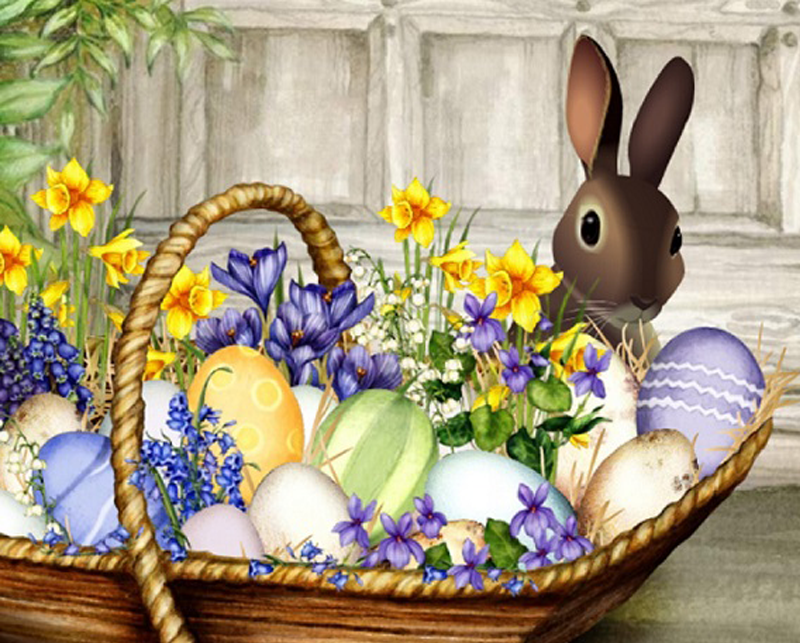
The Easter egg hunt is, however, relatively recent. It probably emerged in Germany during the 17th and 18th centuries, where stories circulated of the Osterhase (Easter Hare), which would lay, hide or deliver eggs (often decorated) for children to find. It wasn’t until the late 19th century that changing ideas about childhood and family life helped the Easter Hare migrate to Britain.
And once it did, it really took off. The Victorians had a remarkable talent for taking a tradition and making it ever more decorative, extravagant and, more often than not, confectionery-based! As chocolatiers’ techniques improved and mass production became easier, chocolate Easter eggs became increasingly popular and eventually replaced the older custom of real, decorated eggs in many households. At the same time, printed greetings cards, children’s books and advertisements helped transform the Easter Hare into the Easter Bunny.
Today, the Easter egg hunt is inexorably linked with the Easter Bunny in one of the most beloved traditions of the year, and trails of small eggs leading to a larger one turn houses, gardens and occasionally even public parks into scenes of fervent foraging.
But why a bunny? Why not the “Easter Hen”, which would at least have the biological decency to make sense! Sadly, our best answer is simply that we don’t know. Perhaps there was once some folklore that we now have no record of, or perhaps there is some long line of rabbit-based theology linking all the way back to some association with the pagan goddess Ēostre (assuming she wasn’t just a mistake by Bede). Most likely, the association of rabbits with fertility and spring collided with the egg symbolism, resulting in an aberrant egg-laying bunny – and one usually considered male! But really, we have no way of knowing.
Your Easter
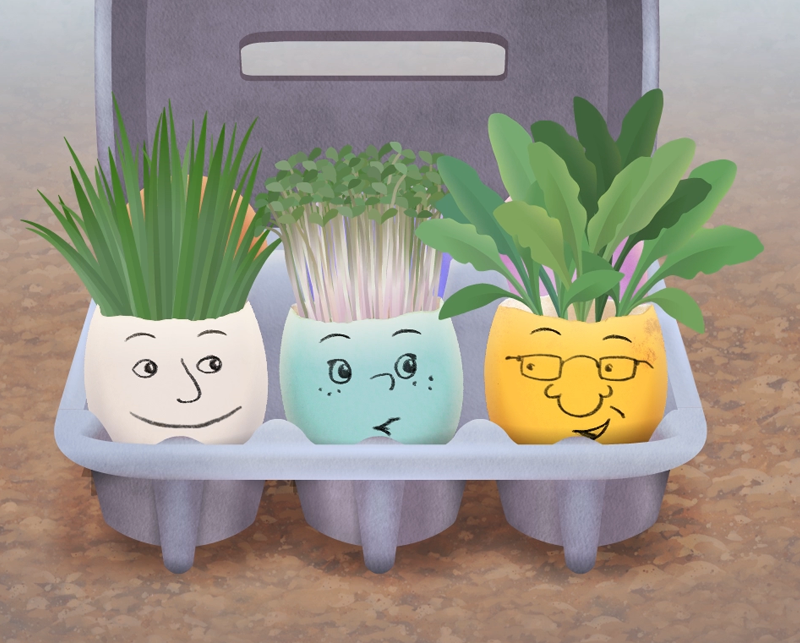
Whether your traditions include church services and Sunday roasts, egg hunts and Cress Heads, all of the above or none of the above, Easter remains a celebration of renewal, the budding of new life from frozen earth, the lengthening of the days and warming of the weather – and the consumption of vast quantities of food!