
.jpg)
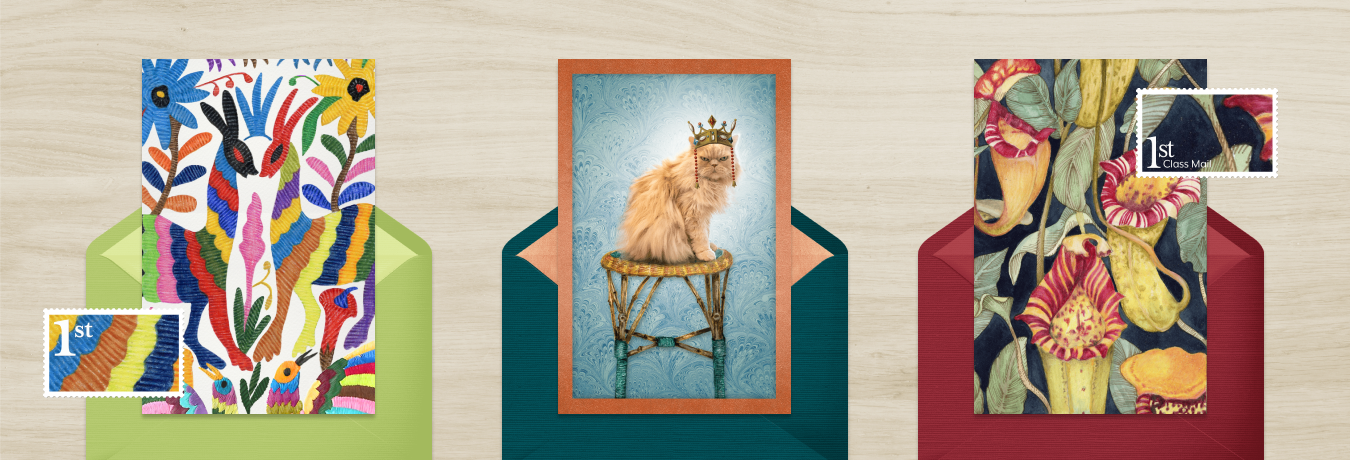
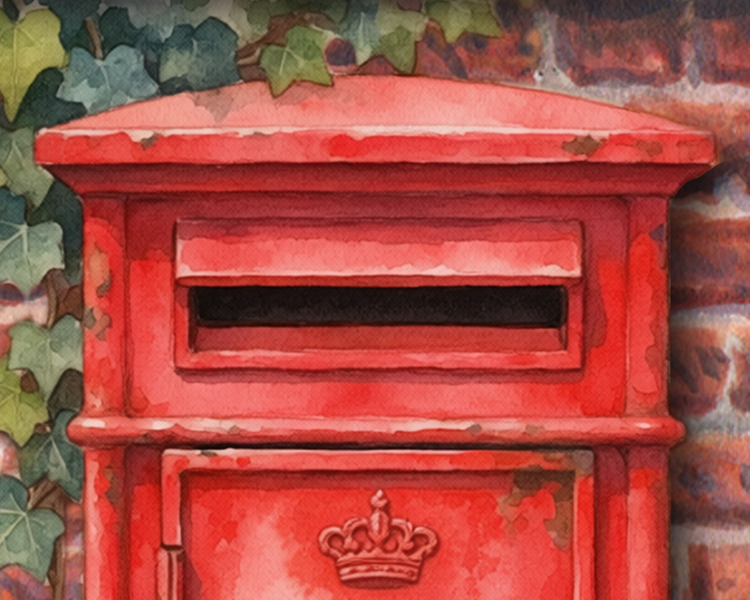
There are few things quite as iconically British as the red postbox. So much so that in a visit a several years ago I was stunned upon encountering one on the streets of the otherwise typically Brazilian city of Londrina. It was only later that I discovered this had been a gift from the UK government to celebrate the 90th anniversary of the city’s founding – Londrina being a British-founded city (hence the name). A little piece of home, planted in the middle of South America – and thousands of miles from the nearest Royal Mail collection round! A reminder, perhaps, that even the smallest of things, ones that we frequently pass by without a moment’s thought, are sometimes worth a closer look.
And now, our newest range of cards has taken on the name of this most familiar of sights: Postbox – and that, of course, provides a wonderful excuse to delve into the history of the postbox, and the Royal Mail as a whole.
The Origins of the Postbox
At a glance, the creation of the postbox and the modern postal service seems almost a dialogue between Britain and France, so let us begin with the Royal Mail, which traces its origins to Henry VIII’s appointment of a “Master of the Posts” to carry royal correspondence – though it wasn’t until 1635 that Charles I opened the service to the public. Even then, posting a letter remained a slow, expensive and unreliable process for many years and, worse, postage was paid by the recipient and not the sender, so a letter could simply be refused at the door – leaving the poor postman to have to carry it all the way back again!
It was in France, however, that the first postboxes appeared. In 1653, prolific inventor Jean-Jacques Renouard de Villayer had them placed at convenient locations in and around Paris, allowing letters to be deposited and collected at regular intervals as part of a new postal service called the “Petite Poste”. Each letter would have a small receipt (for the value of one sol) attached and could be delivered anywhere in the city up to three times a day. A work of genius, which failed quite spectacularly.
The reasons for this are not entirely known but, most likely, it was simple disuse. The wealthy already had servants to deliver their messages, the poor couldn’t afford it, and the fact that the idea of prepayment was unprecedented meant the middle classes it was aimed at, particularly merchants, were fearful of using an unfamiliar and untested system for their important correspondences. Because of this, the boxes were quickly filled with rubbish by pranksters. The rubbish attracted mice, the mice ate the letters, and, if we can trust Antoine Furetière's “Roman Bourgeois”, not a single one reached its destination!
Whatever the case, the Petite Poste was abandoned after a few years and Renouard de Villayer moved onto other pursuits, including the invention the “chaise volante” — a passenger lift using counterweights. The Petite Poste and its postboxes were, it seems, just an idea too far ahead of its time – or perhaps just in the wrong place.
Revival
In 1680, a London merchant named William Dockwra and his partner Robert Murray launched the London Penny Post: a network of several hundred receiving houses across the city with, notably, no postboxes. Collections were made almost hourly and deliveries guaranteed within four hours, all for a prepaid penny. It was tremendously popular with London's merchants and citizens alike. So much so that the Duke of York, whose income depended heavily upon the existing General Post Office, had it suppressed in 1682. The government then promptly took over and ran it almost unchanged.
It was London's success, rather than the earlier Parisian failure, that eventually inspired the resurrection of the postbox in France. In 1758, philanthropist Clément-Humbert Piarron de Chamousset obtained a royal letters patent from Louis XV to establish a new city postal service in Paris, based on that in London, which launched on 9th June 1760. Hundreds of postboxes were installed across the city, nine sorting bureaux were opened and around 150 postmen made three deliveries a day. This time, it worked. The service was nationalised in 1780 and rapidly imitated in cities throughout France. By 1829, postboxes were in common use throughout the country. But Britain, curiously, still had no national system of its own – at least until Anthony Trollope entered the conversation.
Novel Reforms
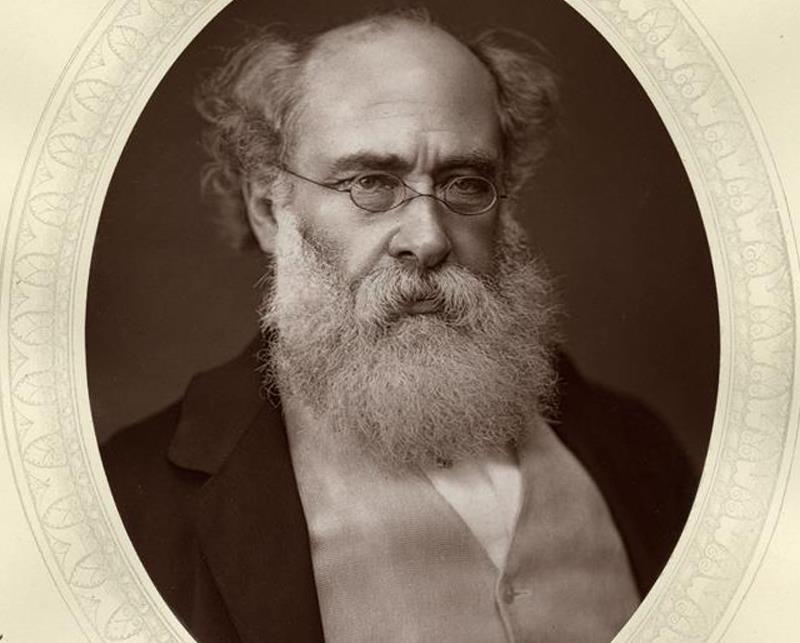
Today, Trollope is remembered as a novelist – one of the greats of the Victorian era, particularly known for “The Warden” and “Barchester Towers”, although his prolific work extends to almost fifty novels. What is generally forgotten, however, is that he spent much of his life working for the General Post Office and it is there that he had an even greater cultural impact.
At the time, the Channel Islands were notorious for the inefficiency of the postal service and so, in 1851, Trollope was dispatched to investigate the problem. Perhaps predictably, he concluded that the delays were largely caused by the unreliable schedules of ships to the mainland – a problem he could not solve if he tried! But what he could do was fix the inconvenient methods of posting a letter in the first place. Having probably seen the continental postboxes at work during his travels, he suggested a similar model be introduced in the UK.
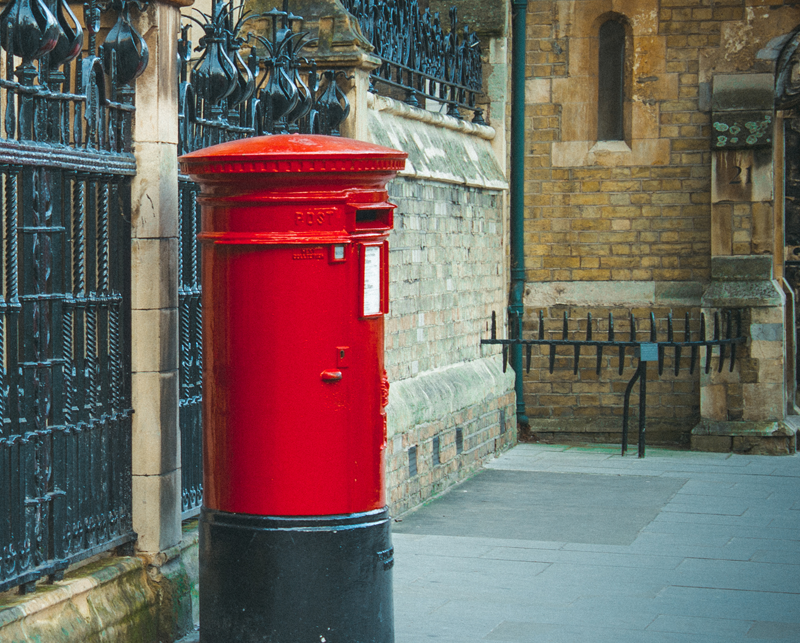
Four of the now-famous red pillar boxes were installed in St Helier, Jersey, on 23rd November 1852. The trial was a huge success, and within a year, the first postbox appeared on the British mainland. By 1860, more than 2,000 roadside boxes had been installed across the country and by the 1890s, that number had hit 33,500. Today, there are approximately 115,000 postboxes in the UK and 98.3% of our addresses are less than half a mile from one.
Gelastic Green, Renowned Red and Crowned Ciphers
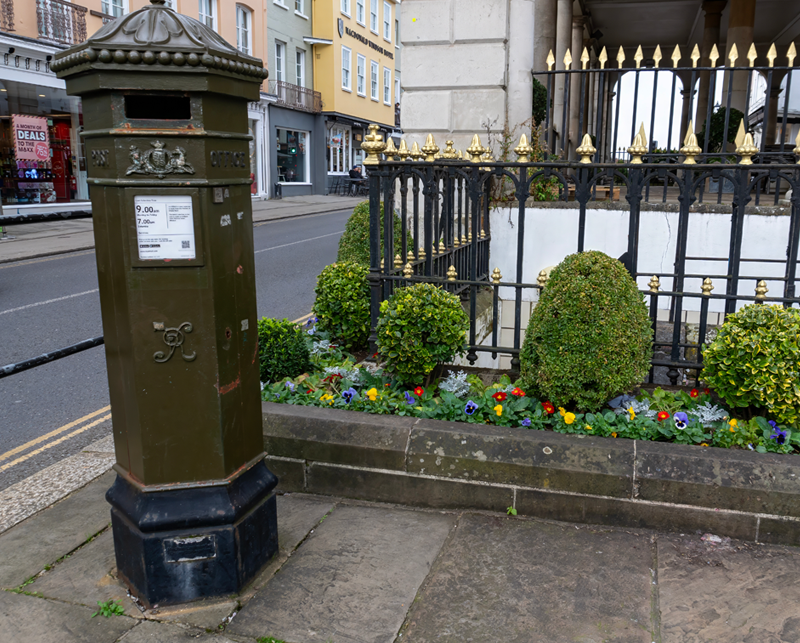
There was no standardised colour for the earliest postboxes. Though the original ones in Jersey were the now-famous red, they appeared in all sorts of colours in the early years. In 1859, however, a standardisation arrived, emblematic of the ‘nimby’ culture that persists today: “it’s a wonderful idea, just don’t spoil my view!”. Painted green to blend into their surroundings – generally hedges – they were the result of endless complaints from the public, who couldn’t find them! So, in 1874, a repainting to a bold, royal red was ordered – and took a full decade to complete.
In the century and a half since, many different forms of postbox have emerged. So here’s a little taxonomy of postboxes: The most beloved design is arguably the iconic Penfold: a hexagonal pillar box produced from 1866 and named after its designer, J.W. Penfold. Crowned with ornamental acanthus leaves, it is the postbox you’ll find on Christmas cards and keyrings – and the one most people picture when they imagine a postbox. It was found to be too expensive in 1879, but replicas were later introduced at sites of historic and natural beauty, and you can still spot green Penfold boxes in Windsor as a nod to the original colour scheme.
Wall boxes arrived in 1857 as a cheaper alternative to pillar boxes. Built into existing walls or sometimes purpose-built brick pillars, they were particularly practical in rural areas. Lamp boxes, introduced around 1896, are the smaller boxes mounted on lamp posts or poles and are the most numerous in the UK nowadays. Ludlow boxes, a small rectangular design from 1885, were intended for smaller post offices, shops with a small post office in them and other locations where a full pillar box would have been disproportionate.
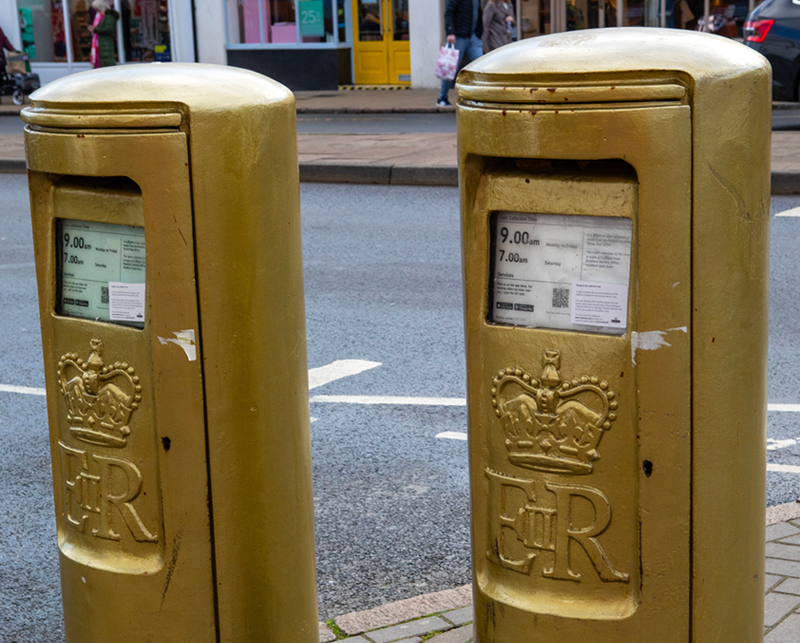
Then there are the weird ones. In the 1930s, a series of blue airmail pillar boxes appeared in London, intended to be used for letters destined for the burgeoning airmail services. They were removed in 1939 and repainted red, though some can still be identified by their double-aperture collection plates – a small ghost of their former purpose. Finally, following a wave of Team GB gold medals at the 2012 London Olympics, a postbox was painted gold in the home town of every gold medallist. While originally intended as a temporary measure, the massively positive public response quickly changed them into permanent fixtures.
Every postbox also carries a royal cypher – the monarch's initials cast into the iron – making them, in effect, miniature history lessons embedded in the street furniture. VR for Victoria, EVII for Edward VII, GR for George V. The Postal Museum notes that over 60% of current UK postboxes carry the EIIR mark of Elizabeth II, a testament to the incredible length of her reign. The rarest are those bearing the cypher of Edward VIII, who abdicated after just 326 days in 1936: only 161 pillar boxes were installed in his name, making them genuine collectors' items for the postbox-spotters among us – and yes, postbox-spotting is very much a thing, with its own dedicated study group!
In Scotland, things differ slightly. Following a constitutional row over whether Elizabeth II was the first or second Scottish queen of that name – Elizabeth I having never ruled Scotland – postboxes there from 1952 onwards carry the Crown of Scotland rather than the EIIR cypher. This problem does not affect King Charles III, however, as both Charles I and Charles II were kings of England and Scotland, so the tradition continues: the first postbox bearing the CIIIR cypher of King Charles III was unveiled in Great Cambourne, Cambridgeshire, on 12th July 2024.
If you ever find yourself looking at one, take a moment to refer back to this and impress a friend!
Postboxes Around the World
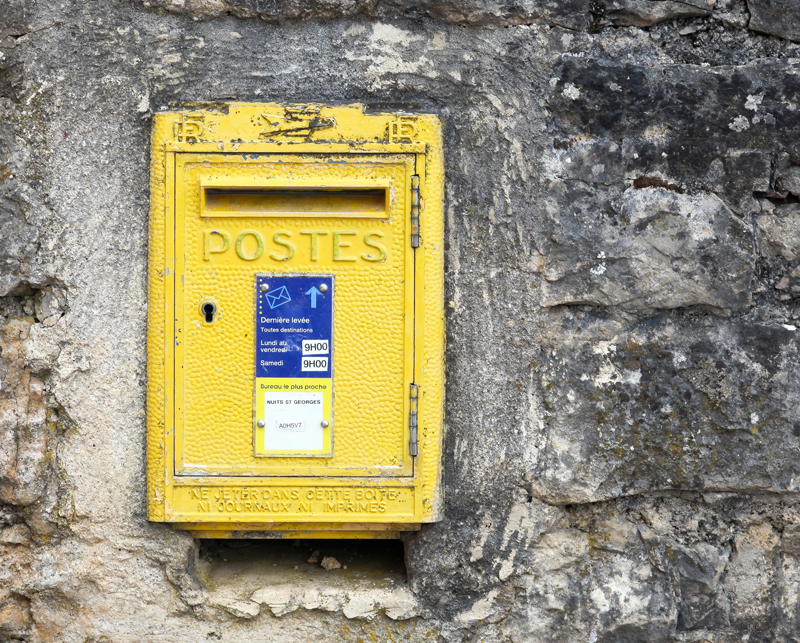
While red is emblematic of British postboxes, much of continental Europe favours yellow, China uses green, and Australia follows Britain’s example with red for standard mail but uses yellow for express. The United States, meanwhile, settled on the dark blue boxes familiar today after indecisively cycling through red, green and olive for several decades.
Many countries inherited their postbox traditions directly from Britain: Malta, Singapore, Gibraltar and various former territories still have red pillar boxes in use, often bearing the aforementioned Victorian or Edwardian royal cyphers.
And then there are the postboxes that defy all logic. In Susami, Wakayama Prefecture, Japan, the local postmaster had an idea: why not install a postbox underwater? So, in 1999, a red cast-iron pillar box was placed ten metres below the surface of the bay, accessible only to divers. Waterproof postcards, written in oil-based marker, are posted by swimmers and collected daily by a member of the local dive shop. Nearly 40,000 pieces of mail have been posted from it since. There are similar underwater boxes in Vanuatu and Indonesia, and two in Malaysia – one of which is a staggering forty metres deep.
Back on dry ground, the Bräutigamseiche (Bridegroom's Oak) – a 500-year-old tree in the Dodauer Forst forest near Eutin in northern Germany – has its own official postal address. A hole in the trunk, three metres off the ground and accessible by ladder, serves as a postbox for those seeking love. The tradition dates to the late 19th century, when a forester's daughter and a young chocolate maker exchanged secret letters through the knothole after her father forbade their courtship. The couple eventually married under the oak in 1891, the story spread and, in 1927, the German postal service assigned the tree its own postcode. At least five, and reportedly more than a hundred, couples are said to have found each other through letters left in its trunk – including the postman whose job it was to collect the mail! One day, Karl Heinz Martens found a letter in the oak addressed to him personally from a woman who had seen him on a television programme about the tree. He soon picked up the telephone and gave her a call. As of the last record I could find, they have been happily married for well over 20 years.
Jacquie Lawson
When it came to naming our new range of ecards – which can be personalised with, among other things, a virtual envelope and stamp – we could think of no better name than that that of the Postbox. And if you’re now feeling inspired to do things the old-fashioned way, don’t forget that this new collection can also be printed and delivered as paper cards in the post! Whether by hand or by one of our oldest and finest institutions, through that which has changed colour, outlived empires, gone underwater and taken root in a German forest – the noble, yet humble, postbox.